Depth Psychotherapy  ·  Seattle

Some aches don't respond to achievement.

High functioning queer folks who still feel stuck.
Those healing family wounds.
Anyone trying to find their way back to the sacred.

Therapy works best when the relationship feels right. I'm a relational depth therapist in Seattle, rooted in the psychoanalytic tradition, and I offer a free 20-minute consultation so you can get a sense of who I am before deciding anything. If something here resonates, I'd love to hear from you.

Now accepting clients  ·  Opening August 2026  ·  Limited availability

A bench beneath a tree overlooking a valley at golden hour

Who this is for

For the person whose competence has stopped protecting them.

You have built a life that looks right from the outside and have started to notice it does not hold you. Something in you is asking for something deeper. A relationship, not a protocol. A descent, not a fix.

This practice is for people carrying a particular kind of grief: a parent lost to death, to estrangement, to addiction, to emotional absence that had no name when you were small. The grief that has no funeral.

It is also for people integrating psychedelic experience, and for people in or leaving tech who are ready to ask what the exhaustion has been trying to tell them.

Many who find their way here recognize themselves in patterns that have names: anxious attachment, people pleasing, the compulsion to give without receiving. This is the work of going underneath those patterns. Of tracing what the medicine opened, or what generational trauma quietly handed down.

I am a queer, non-binary therapist. LGBTQIA+, kinky, and clients in non-traditional relationship structures are welcome and affirmed here.


The Approach

What it is like to be in a room with me.

"I will not hand you a worksheet and call it healing. This is not therapy that gives you tools to manage your life. It is therapy that changes the person living it."

I pay close attention: to the thing you almost said, to the pattern you have repeated in every relationship but never named. I am interested in what lives underneath the story you have learned to tell about yourself.

I practice from a liberatory, intersectional feminist lens, which means I will never treat your suffering as purely individual. The exhaustion, the compulsive competence, the grief: these developed inside systems that were not built to hold you. If the workplace is exploitative, if the relationship is extractive, we will name that together. Healing is not only coming back to yourself. Sometimes it is recognizing what was never yours to carry.

Your body is welcome here. The breath that catches mid-sentence, the tightness that arrives before the feeling does: I am listening to all of it. The body often knows what happened long before the mind has language for it.

How depth psychotherapy differs from CBT

What the work looks like over time

Depth work doesn't fit a timeline. But it does have a shape.

01   The beginning

Making contact.

We are getting to know each other. I will ask what brought you here and what has and hasn't worked before. You are noticing what it feels like to be in a room with me, whether something relaxes or resists. I am listening not just to what you say but to what you leave out.

What matters is whether something begins between us that feels worth continuing.

02   The middle

Where depth work earns its name.

Patterns begin to surface. The thing you came for often turns out to have a different question underneath it. Old patterns show up in the room between us. Dreams may get louder. The body may start to speak.

This is not a sign that something is going wrong. It is a sign that the work is working.

03   What comes after

The work doesn't end. It changes.

Some people work with me for years. Others reach a natural pause and return when life asks something new. Some finish and don't come back, and that's right too.

The goal is not to need me forever. It's to carry what you've learned into the rest of your life.


What changes

People who do this work don't just say "I learned coping skills."

I stopped performing a version of myself I thought everyone needed.

I can feel my feelings without being swallowed by them.

I stopped choosing people who can't see me.

I finally grieved what I needed to grieve, and something loosened.

I am less afraid of being still.

I stopped carrying what was never mine to carry.

This relationship taught me what relationships should feel like.

These are not guarantees. Every person's experience is different. But this is the territory. Not symptom management. Not optimization. A different relationship to yourself and to the people you love.


Areas of Depth

Some thresholds I know well.

A forest path descending through autumn trees with exposed roots

Mother Wound

The grief that has no funeral.

For people who were parentified, enmeshed, abandoned, or simply never seen. The wound that shapes how you love, how you work, who you allow yourself to become.

A kintsugi bowl, broken ceramic repaired with gold

Tech Burnout

The ache underneath high achievement.

You optimized everything. It still wasn't enough. This is not a productivity problem. It is a question about what the exhaustion was trying to tell you.

Light breaking through a cave entrance

Psychedelic Integration

What you saw still needs a home.

Non-ordinary states can open doors that ordinary life doesn't know how to walk through. Integration is the slow, careful work of living what you learned.

Herbs, crystals, and cinnamon on a wooden bowl

Microdosing Support

The witness the practice needs.

If you are microdosing or considering it, I offer therapeutic support for what the medicine surfaces. Not as a coach or facilitator, but as a therapist who can help you work with what opens.


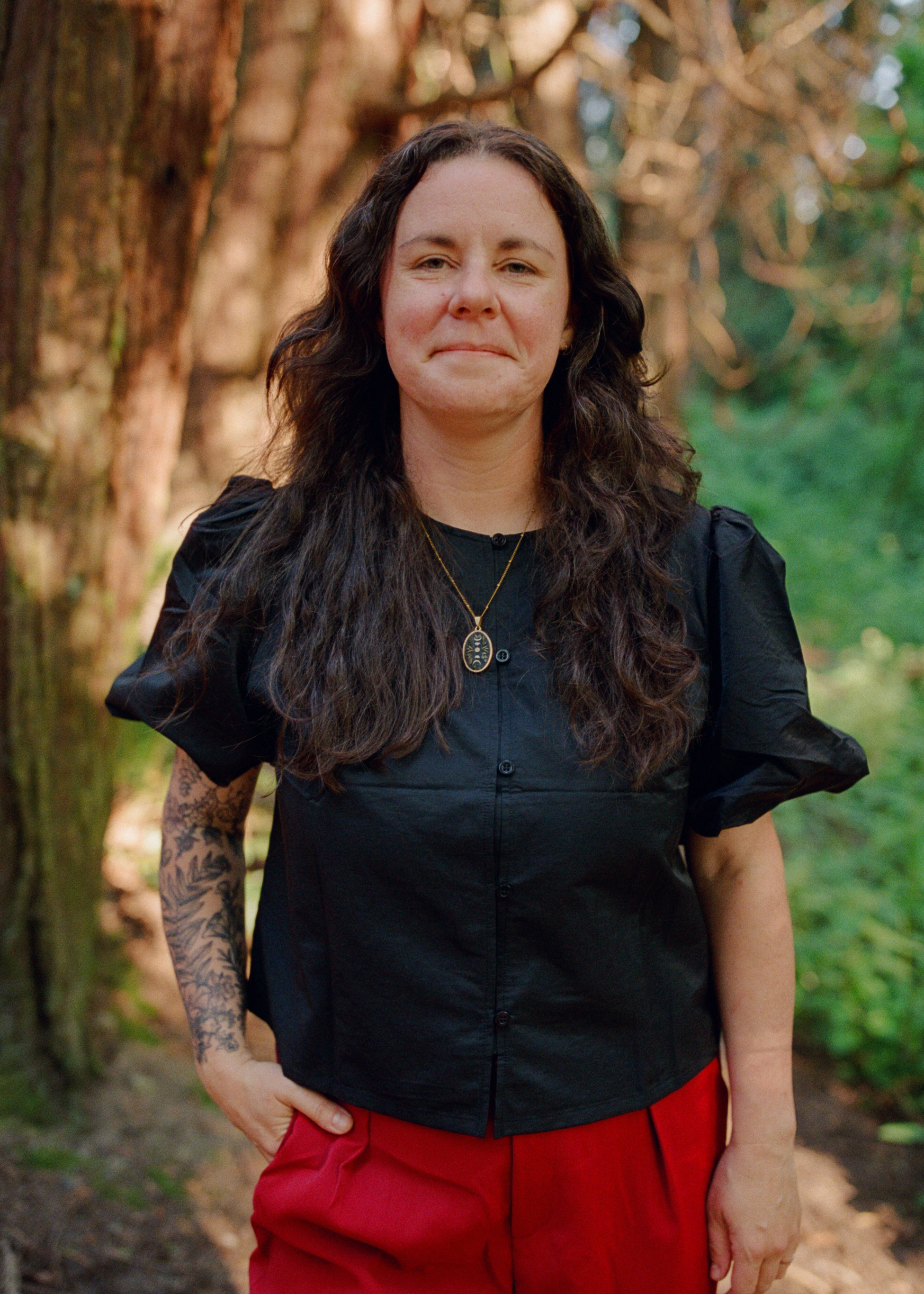
LP, depth therapist in Seattle

About LP

A clinician who came the long way around.

I am a queer, non-binary psychotherapist in Seattle's Central District working with people meeting the mother wound, with people preparing for and integrating psychedelic experience, and with clients whose high-functioning lives have stopped holding them. My practice is deliberately small and oriented toward depth.

I spent years as a senior technical product manager building enterprise data platforms at companies whose names you would recognize. I know the particular shape of that life from the inside, the high salary that somehow is not enough, the competence that becomes a cage, the way burnout in that world is never just about work.

I did not leave tech because I failed at it. I left because I could no longer ignore what the exhaustion was asking me. And underneath the exhaustion was a longing for depth, for connection, for something sacred. I have made the descent this practice is named for. I know what lives down there, and I know what it is to come back changed.


Training & Orientation

Where the clinical thinking comes from.

My clinical thinking is shaped by the relational psychodynamic and psychoanalytic tradition. I practice from a liberatory, intersectional feminist lens and draw from feminist and perinatal theorists, somatic and attachment-based approaches, and the emerging clinical literature on psychedelic-assisted psychotherapy.

My thinking is also shaped by sources that live outside the clinical literature: myth, ritual, the witchy, and the traditions that bring us back to something sacred. Closer to the earth.

I hold an MA in Counseling Psychology with a perinatal specialization from Bastyr University, and I am currently pursuing the CIIS Certificate in Psychedelic Therapies and Research. I maintain ongoing clinical supervision.

LP (they/them)

MA Counseling Psychology  ·  LMHCA  ·  Supervised Practice  ·  Washington State


Opening August 2026

The practice is opening soon. I'd love to hear from you now.

I am currently building my caseload for an August 2026 opening. If something on this site is resonating, I welcome you to reach out now. We can have a consultation call, begin to get to know each other, and hold a space for you when sessions begin. There is no obligation. Just a conversation, and a place on the list.

Join the Waitlist

Questions & answers

What people want to know, first.

How is depth psychotherapy different from other kinds of therapy?

Depth psychotherapy takes the unconscious seriously. It works relationally and over time, and it is interested in meaning, in dreams, in repetition, in what your body knows before you do, rather than in symptom management alone. Where short-term therapies aim to give you tools, depth work aims to change the underlying structures that made the tools necessary in the first place.

How long does this kind of work take?

It depends on you and what you are working through. Some clients find what they need in several months; others stay for years because the work keeps opening into new territory. Sessions are weekly, sometimes twice weekly. There is no predetermined length, we check in together, and you are always free to decide what feels right.

Do you take insurance?

I am out-of-network with all insurance panels. This is common among depth-oriented practices and allows me to work without third-party oversight on the frequency and duration of care. I can provide superbills for possible out-of-network reimbursement.

I hold a limited number of reduced-fee slots. If cost is a barrier, please ask about them in your consultation.

What are your fees?

Sessions are $175. I may be able to provide superbills for clients with out-of-network benefits. A limited number of reduced-fee slots are available, please ask if finances are a concern.

Do you administer psychedelics?

No. I offer the clinical container around psychedelic experience: preparation before a planned journey and integration afterward. My clients engage the medicines through legal channels such as ketamine-assisted psychotherapy, Oregon psilocybin services, or clinical trials.

Can we work together if I do not plan to use psychedelics?

Yes. Most of my clients are not doing psychedelic work. Psychedelic integration is one doorway into the practice; the mother wound and long-term depth work are equally central.

What does "supervised practice" mean?

I hold a full graduate-level clinical degree and am practicing under clinical supervision in Washington State, as required by licensing law for new clinicians. My supervisor reviews my work regularly.

This is standard practice, not a limitation. It means there is an additional layer of oversight on the work I do with you, and I think that is worth being transparent about.

How often would we meet?

Weekly, to start. Depth work is relational, and the relationship needs time and regularity to develop. Consistency is how the work takes root.

Some clients eventually move to every other week as the work stabilizes. That is a conversation we would have together when the time is right.

Is this work done in person or online?

I offer both in-person sessions in Seattle's Central District and secure telehealth for clients throughout Washington State. The choice between them is something we can discuss in the consultation.

Are you affirming of LGBTQ+ clients?

Yes. I work with queer and trans people, and with people navigating gender and sexuality. This is not a footnote to my practice. It is central to it.

I am a queer practitioner. You do not have to explain your life to me before we can get to the actual work.

How do I know if we would be a good fit?

The honest answer is that you find out by talking. The consultation is twenty minutes. No cost, no pressure. A chance to hear my voice and notice what happens in you. Fit is not a list of criteria. It is something you sense. Trust what you sense.


The Practical

Session Fee

$175

Reduced fee, limited slots

Days & Hours

Fridays

8 AM – 4 PM

Location

Seattle

Telehealth across WA

Insurance

Out-of-network

Superbills provided


I am accepting new clients beginning August 2026. Consultations are free, 20 minutes, and held via video. There is no obligation.


Beginning August 2026

If something here named what you've been carrying, I'd like to hear from you.

Send a brief note about what brings you here. I respond to all inquiries personally.

This is not a crisis line

This form is for scheduling inquiries only. It is not monitored in real time. If you are in crisis or immediate danger, please call or text 988 (Suicide & Crisis Lifeline) or 911.